VALLEY
TAYLOR
Making things, resisting a music career, the usefulness of selfishness, memory, novelty, and moving through life without a final destination.
A conversation with Valley Taylor on the eve of One Hundred Billion Points of Light.
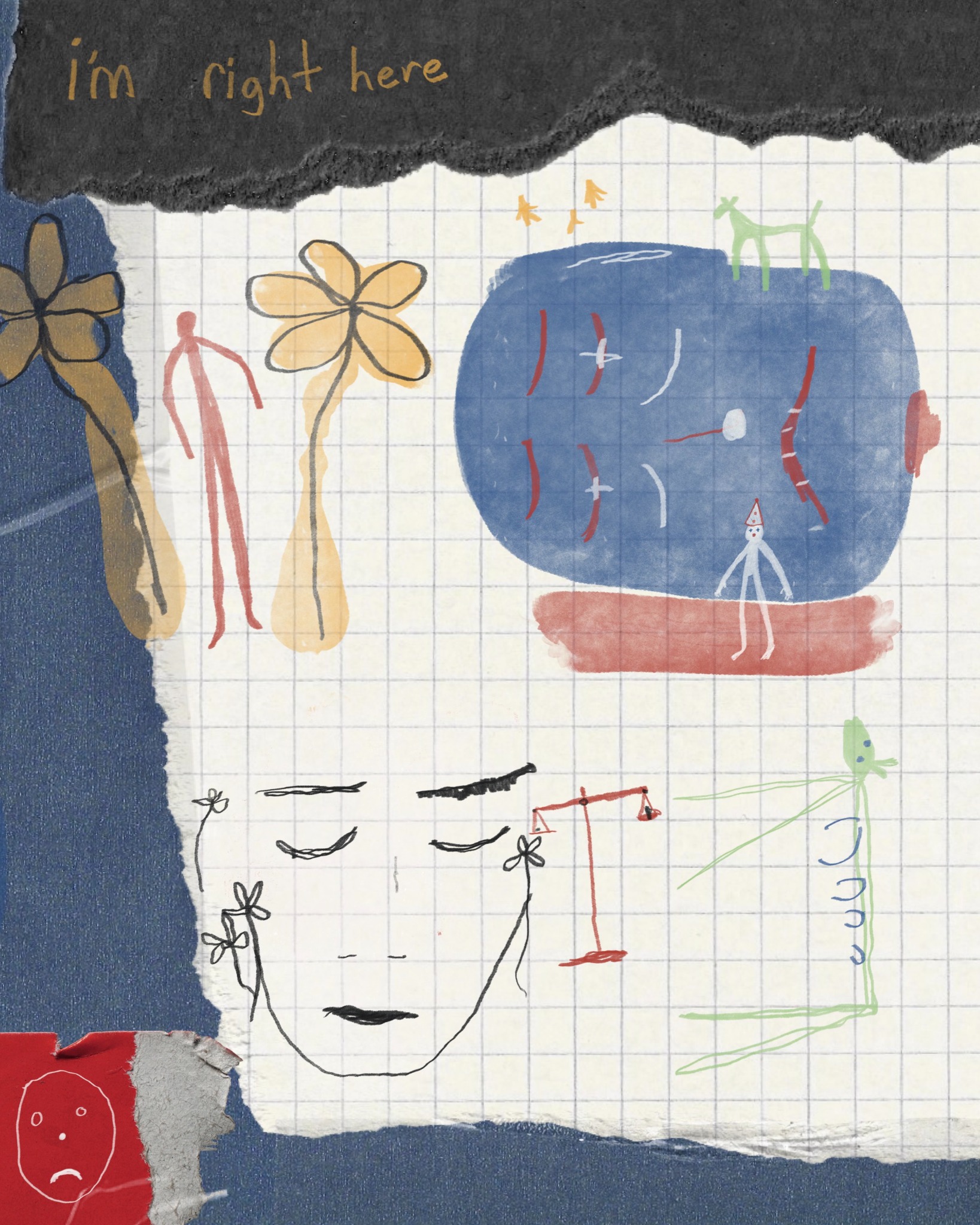
You’ve described One Hundred Billion Points of Light as a checkpoint. When you started it, that checkpoint seems to have been mostly musical—you were calling it “LP2” because you wanted something that could stand as the next major marker after Lifetime of Unending Joy.
But now Valley Taylor seems considerably larger than the recording project. You’re drawing, making films and animation, building websites, designing physical objects, producing music, and now starting Atlas Exploding as a place to document other artists.
When did you first realize that music might not actually be the center of what you’re doing—that making things itself might be the center, and music is just one of the languages you happen to be especially fluent in?
I think I always knew music wasn’t the center of what I was doing, because so little of my time has actually been spent on music despite how large of a body of work I have.
I really spend a fraction of my life on music. In fact, in my house I only have my acoustic guitar, a bass, a mic and my MIDI controller—just the bare-bones stuff I need for recording. All my amps and guitars and other production implements live in my rehearsal space in Oakland.
Do you think music benefits from not having your entire life organized around it? If suddenly you had enough success with Valley Taylor that you could make music your full-time occupation, would you actually want to?
I know my music benefits from it not being all I spend my life on, because that would make it so corny and commodified.
I think my music is helped by me living most of my life outside of making it, so there’s not some weird artistic cannibalism going on.
And if I had a desire for there to be enough success to make it my full-time occupation, I would have already done that. But I clearly don’t want it that way. I totally act against it and put tons of hurdles in my way to keep myself out of it, despite my capacity for it.
That separates ambition from professionalization. You seem extremely ambitious about the work itself—you’ll make records, build elaborate websites, learn animation, make films, design physical objects—but resistant to maximizing the commercial machinery around it.
What does success actually mean to you, then?
I have success now. I have a very good life and I am very happy.
As someone who was diagnosed with depression, the way my life is now—so full of meaning and joy—is success.
So when your life already feels successful, what is all the making for? When you finish a record or drawing or film or strange webpage, what need has been satisfied that eventually makes you want to make another one?
I make things because it feels good to make them. The journey is exhilarating from start to finish, although I will admit the finish is always the worst part.
I hate doing a lot of the polishing and packaging, although lately I’ve been learning to embrace it and find artistic ways to approach the end of a work and express myself even further.
Is there a point where you consider something genuinely finished anymore? Or can a record keep accumulating drawings, films, webpages, performances and other objects long after the audio itself is done?
I think that nothing is finished, probably.
Everything is inanimate and you possess it like a spirit and breathe life into it and make it move.
When you stop possessing something you’ve made—when an old album or drawing no longer feels alive to you—can old work eventually feel like it was made by somebody else?
I don’t think old work feels alien. I often revisit things and reapproach them in a new way without demeaning or reproaching who I was and how I did things before.
I have a lot of long-suffering for myself because I strive to know myself, and in that understanding there is a patience and love I have for who I was.
I will not be poisoned by the past. I will always do my best to remember who and why I was.
Does that patience extend to other people from your past?
I think it does. Over time I have let most of my old friendships rekindle, as long as they are helpful.
But I would not entertain some, only because I could tell they would become a redundant experience, and I crave novelty.
Are you ever afraid that craving novelty makes you leave things—or people—too early? That you might miss something whose next stage would only reveal itself if you stayed?
I just don’t see the harm in it.
If somehow I “missed” an opportunity—no, I didn’t. The world is so big and there is so much love to be found.
There’s a lot of memory, absence and longing in your work, but the person describing it doesn’t seem particularly afraid of loss. So where does the sadness come from?
Is there a real sadness, or is it reality described as sadness?
It is true I have experienced profoundly sad experiences, but was I feeling the emotions of sadness?
I could just be expressing reality, but not how I feel.
When you make something about a person or experience from your past, are you trying to communicate how you feel about it—or document how it exists inside your memory? Do you care if someone completely misunderstands your emotional relationship to it?
I don’t think I care about very much at all, especially not how other people understand my work. But I am curious about it.
As far as communication, I rarely know what I am trying to communicate. My thoughts are often jumbled from trying to make sense of the enormity of existence.
So maybe songs are just my snapshots of experience, and I’m trying to understand the pieces that catch my attention.
What determines which pieces catch your attention?
It could be the weirdest things. There’s no rhyme or reason to it.
In fact, that could definitely be a big part of why I create. I may be creating to understand myself and why the subjects that catch my attention do that.
I don’t know the answer, but I want to get closer to an answer—although I will say I’m pretty sure there isn’t an answer.
Do you actually want to fully understand yourself? If somebody could hand you a completely accurate explanation of why you are the way you are, would you want to read it?
I don’t know if I want to fully understand myself, and I’m pretty sure that’s not possible, but I love to try.
I feel like I benefit from it greatly. It helps me navigate the world and my relationships with less friction and with more conviction.
I would of course read something like that, but I don’t know if I could believe that’s all there was to know about me.
Has somebody ever understood something about you through your work that you hadn’t understood about yourself yet?
Not really, only because I haven’t had enough of a pool of people, I’m sure—which may actually be my drive to put some effort into my art.
What are you curious to discover from a larger audience?
I’m very curious about discoveries from a larger audience. I would love to see the data on every aspect of them and their analysis of me.
I’m very uninterested in what would happen to me. I know that whatever happens, happens.
Suppose hundreds or thousands of people eventually arrived at the same interpretation of you and you completely disagreed with them. Would their consensus make you reconsider your understanding of yourself?
Of course I would privilege myself.
I only care about me. I don’t care about strangers. My curiosity is simply that—I don’t need their input.
When you say, “I only care about me,” what does care mean there?
I am a human and naturally selfish and full of survival instincts.
But two self-interested people can construct radically different lives. What do you think made your self-interest produce a life organized around making things, loving people, seeking novelty, understanding yourself and protecting your independence rather than money, status, power or security?
It is probably my desire for having an enjoyable life.
An enjoyable life isn’t necessarily an easy one. It can still contain frustration, uncertainty, work, heartbreak and discomfort. What makes something worth suffering for? How do you distinguish between difficulty that belongs to a life you want and difficulty that’s simply making your life worse?
I probably don’t recognize it immediately.
I normally make a change shortly after realizing I’m not enjoying myself or something isn’t worth it.
Have you always been willing to change direction that easily?
It’s easy to change directions when you don’t have a final destination.
If there is no final destination, what gives your life continuity? What makes the person making something fifteen years ago and the person sitting here now feel like the same ongoing life?
My life has continuity because it’s me.
I’m still the same person no matter where I go. I carry who I am. Nothing can take that away from me, for better or worse.
IN ORBIT: VALLEY TAYLOR
An Atlas Exploding playlist shaped by Valley Taylor’s current listening, longtime favorites, influences, and whatever else has found its way into orbit.
VALLEY TAYLOR
Atlas Exploding is an independent journal and record label documenting artists and the things they make.
← BACK TO JOURNAL